
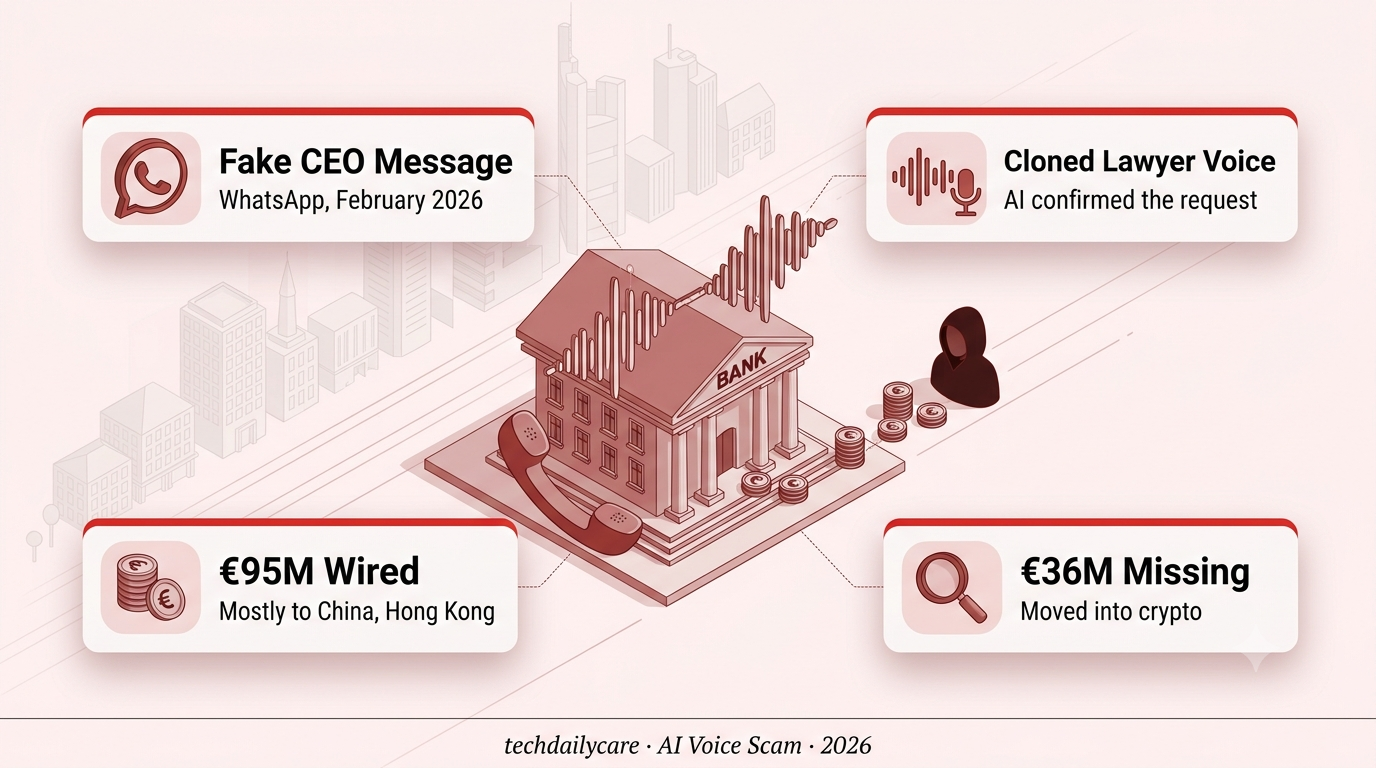
AI Voice Scam Steals €95 Million
From Italy’s Fideuram Bank
A fake CEO on WhatsApp and a cloned lawyer’s voice on the phone convinced a bank chairman to wire $108 million abroad.
An AI voice scam just pulled off one of the largest known impersonation frauds against a European bank, and it started with a single WhatsApp message. According to Reuters, then-Fideuram Chairman Paolo Molesini received a message that appeared to come from Intesa Sanpaolo CEO Carlo Messina, asking for urgent help with a confidential overseas transaction. Fideuram is the private banking arm of Italy’s biggest lender.
A follow-up phone call then seemed to come from a senior partner at a prominent Italian law firm, confirming the request. Sources told Reuters the callers used AI to replicate that lawyer’s voice. Molesini told his finance department to arrange a series of transfers, mostly to accounts in China and Hong Kong, and about €95 million left the bank.
This piece walks through how the scam was built, where the money went, why a cloned voice was enough to close the deal, and what finance teams should change before the next call comes in.
Who Got Impersonated
The group CEO of Intesa Sanpaolo on WhatsApp, and a senior partner at a well-known Italian law firm by phone.
How the AI Voice Scam Worked
A trusted-sounding message set the story, then a cloned voice on a live call confirmed it and removed doubt.
Where It Went
Mostly to accounts in China and Hong Kong, then through overseas accounts and into cryptocurrency.
What Prosecutors Are Doing
Milan prosecutors are investigating a foreign national living outside Europe for computer fraud.
How the AI Voice Scam Began With a WhatsApp Message
The SetupIn February, the then-chairman of Fideuram received what looked like a message from the CEO of Intesa Sanpaolo. It asked for urgent, discreet help with an overseas transaction. Every ingredient of classic executive fraud was there: a senior name, a confidential deal, and time pressure.
The Cloned Voice That Sealed the Deal
Voice CloneA phone call followed that appeared to come from a senior partner at a prominent Italian law firm, confirming the transaction was legitimate. Sources told Reuters the caller’s voice was an AI replica. That second channel is what made the fraud land: the chairman got confirmation from a second, independent-seeming person.
Where the €95 Million Went
The Money TrailThe transfers went mainly to foreign accounts in China and Hong Kong. Cooperation between authorities in China, Portugal, and Italy later recovered roughly €53 million. The rest, around €36 million, passed through a network of overseas accounts and was converted into cryptocurrency, and it has not been traced.
Why This AI Voice Scam Won’t Be the Last
The PatternItaly has seen this before. In 2025, fraudsters used an AI clone of the country’s defence minister’s voice to target business figures including Giorgio Armani and Prada co-founder Patrizio Bertelli. Former Inter Milan owner Massimo Moratti sent nearly €1 million, which police later traced and froze. The Fideuram case shows the same playbook working at a far larger scale.
The fake voice didn’t beat the bank’s systems.
It beat one person’s trust.
- Call back on a number you already have, never the one that just called or messaged you.
- Require two approvers for large or overseas transfers, no matter who is asking.
- Treat urgency plus secrecy as a red flag, especially a confidential deal that skips normal process.
- Agree on a verbal passphrase with executives and outside advisers for out-of-band confirmations.
- Assume any public voice can be cloned: interviews, podcasts, and conference talks are enough raw material.
⚠️ Why This AI Voice Scam Works on Smart People
1. Two channels feel like verification. A message plus a confirming call looks like independent proof, but both came from the same attacker.
2. Familiar voices lower our guard. Voice cloning is now good enough to fool someone who knows the impersonated person well.
3. The scam exploits hierarchy, not technology. The fix is a process that lets anyone pause a big transfer without offending a senior name.