
GitHub Copilot, Your Chats No Longer Expire After 28 Days
A quiet cluster of policy changes now bills every seat upfront and keeps Copilot chat data for the life of the account
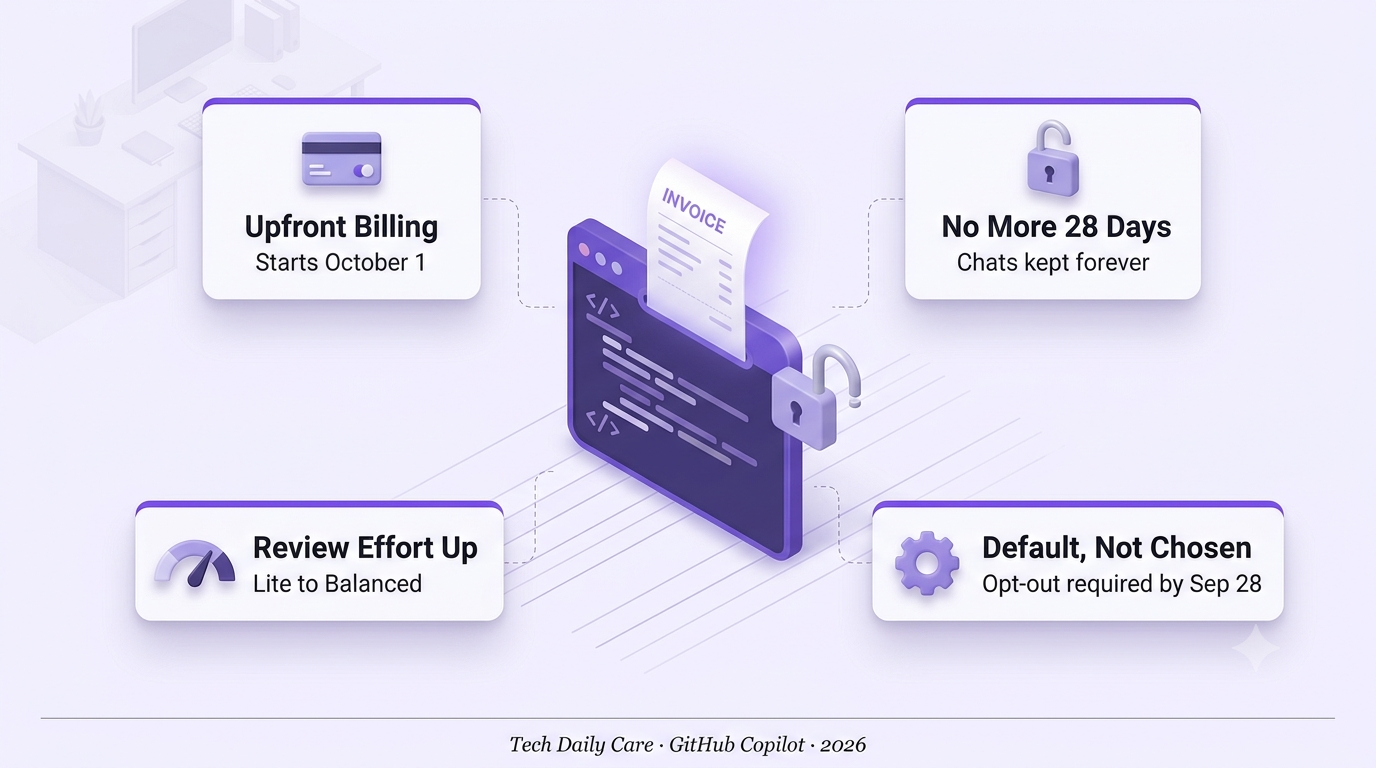
GitHub just changed how it bills and stores every Copilot seat, and most engineering teams will not notice until the invoice or a compliance review forces the question. Between late September and October 1, 2026, GitHub rolled out three separate policy shifts to Copilot Business and Enterprise: upfront seat billing, a single merged Copilot Chat experience with indefinite data retention, and a heavier default effort level for automated code review.
The billing change is the most direct. Starting October 1, all Copilot Business and Enterprise seats paid by credit card or PayPal are charged upfront at the start of the next billing cycle, and new seat assignments require payment before a user gets access at all. GitHub says the prices themselves are not changing, only when and how orgs pay for the seats they have already assigned.
The quieter change is the one with more lasting consequences. No earlier than September 28, GitHub merged Copilot Chat on github.com, Copilot Chat on GitHub Mobile, and the Copilot cloud agent into a single experience, enabled by default. Under the new setup, chat data is retained for the life of the account instead of being cleared after 28 days. Admins who wanted to keep the old 28-day window had to manually opt out before the switch; anyone who did nothing is already on the new default. A third change, arriving the same week, moved the default Copilot code review effort level from Lite to Balanced, meaning every automatically requested review now runs heavier by default unless an org explicitly dials it back.
Three Policies, One Stretch
Billing, chat data retention, and code review defaults all shifted for Copilot Business and Enterprise within about five weeks.
The Bill Comes Due Upfront
Every assigned seat is charged at the start of the billing cycle now, not after usage, changing how finance teams plan Copilot spend.
Chats Don’t Expire Anymore
The unified Copilot experience keeps conversation data for the life of the account instead of clearing it after 28 days.
Check Your Org Settings
Admins who didn’t opt out before September 28 are already running on the new defaults, whether they meant to or not.
Upfront Billing, Explained
BillingStarting October 1, 2026, existing Copilot Business and Enterprise customers paying by credit card or PayPal are billed for every assigned seat at the start of the next cycle, before usage happens. New seat assignments now require payment before a user can access Copilot at all. Revoking a seat mid-cycle still does not trigger a prorated refund.
The Silent Opt-In on Chat Data
Data RetentionCopilot Chat on github.com, Copilot Chat on GitHub Mobile, and the Copilot cloud agent merged into one unified experience no earlier than September 28. It is enabled by default, and chat data now persists for the life of the account rather than being deleted after 28 days. Opting out before the switch was the only way to keep the old retention window.
Code Review Just Got Heavier by Default
Review EffortThe default review effort level for GitHub Copilot code review moved from Lite to Balanced on September 28, for both new and existing repositories and organizations left on the Default setting. Balanced runs a deeper analysis than Lite, which generally means more AI credits consumed per automatically requested review.
What Admins Should Check Now
Action ItemsThree defaults changed at once, and none of them required an email confirmation to take effect. Reviewing Copilot billing settings, the cloud agent data retention policy, and the code review effort level in org settings is the fastest way to see whether a team is quietly running on new defaults it never explicitly chose.
Nobody reads the changelog
until the bill doesn’t match
⚠️ Before You Assume Nothing Changed For Your Org
1. Doing nothing was a choice too. Orgs that took no action before September 28 are already on the unified Chat experience with indefinite data retention, not the old 28-day window.
2. Cancel and return carries risk. GitHub notes that fully canceling Copilot and re-subscribing later may trigger updated account vetting and billing behavior, not a clean reset.
3. Heavier review defaults cost credits. Balanced-effort reviews generally consume more AI credits than Lite, which can show up as a usage spike teams don’t immediately connect to this change.