
Artificial Intelligence Automation Is Replacing 85 Million Jobs — Here Is What You Need to Know
Why This Moment Is Different
The World Economic Forum estimates 85 million jobs will be displaced by automation by 2025, yet 97 million new roles will simultaneously emerge. That gap is where businesses either win or get left behind.
Every company that ignores this shift is handing competitors a structural advantage that compounds daily.
Key takeaway: The window to adopt intelligently is open now — but it is closing fast.
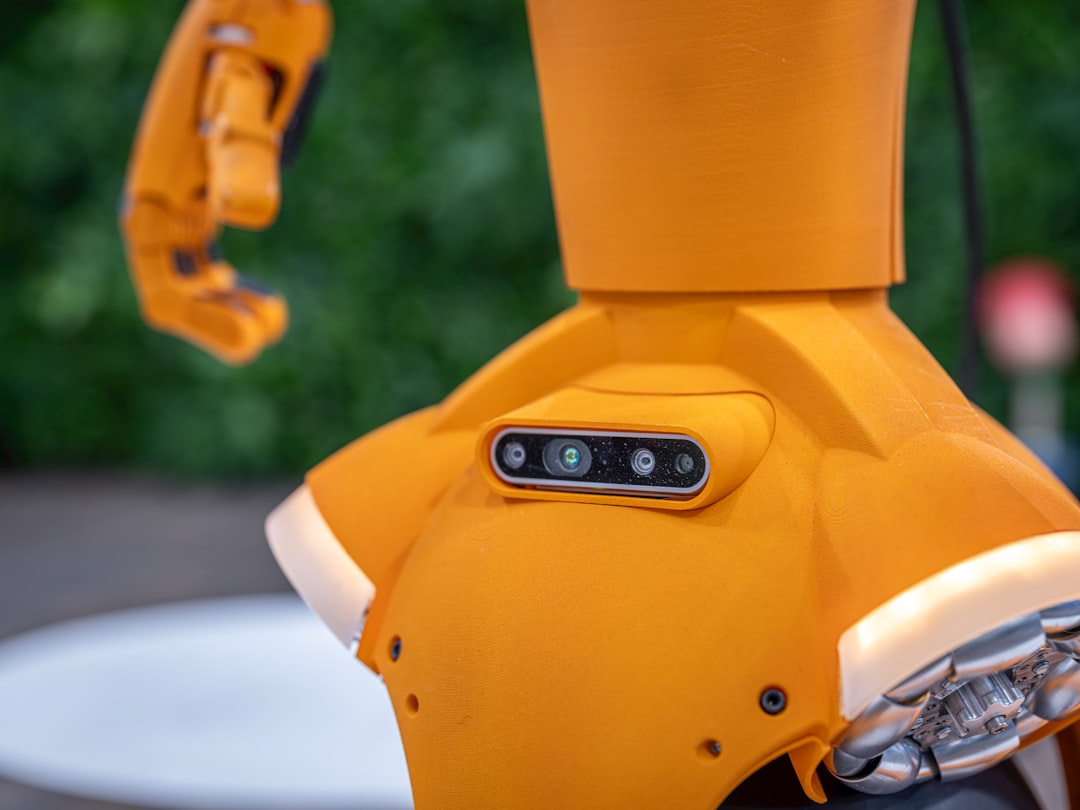
Photo by Enchanted Tools on Unsplash
What Artificial Intelligence Automation Actually Means
Artificial Intelligence Automation is the combination of machine learning, natural language processing, and robotic process automation to execute tasks without human intervention. It goes far beyond simple macros or scheduled scripts.
- AI automation reduces operational costs by an average of 31% according to McKinsey’s 2023 global survey
- It can process unstructured data — emails, images, voice — that traditional automation cannot handle
- Deployment now spans industries: healthcare, finance, logistics, and software development
Understanding the distinction between basic rule-based automation and true AI-driven systems is the first step toward making smarter investment decisions.
Key takeaway: Artificial Intelligence Automation is not just faster automation — it is fundamentally smarter automation.
The Numbers That Prove This Technology Delivers
Businesses adopting AI automation are seeing measurable returns across every major performance metric. A 2023 Deloitte report found that 63% of companies using AI automation reported revenue growth within the first year of deployment.
Processing speed improvements are equally dramatic. AI systems handle invoice processing in seconds versus the industry standard of 3–5 business days.
Error rates drop significantly too. Human data entry carries an average error rate of 1–3%, while AI-driven pipelines consistently achieve 99.5% accuracy or higher.
Key takeaway: The ROI case for AI automation is no longer theoretical — it is documented and repeatable.

Photo by Marjan Blan on Unsplash
How to Implement AI Automation in Your Organization
Rolling out AI automation does not require a complete infrastructure overhaul. A structured, phased approach keeps risk low and learning curves manageable.
- Step 1: Audit your current workflows and identify the three highest-volume, lowest-complexity tasks consuming human hours
- Step 2: Select a platform that fits your stack — options include UiPath, Microsoft Power Automate, or Google Cloud AI
- Step 3: Run a controlled pilot on one workflow for 30 days, track error rates and time savings, then document results before expanding
- Step 4: Train your team on exception handling, because AI systems still need human escalation paths for edge cases
- Step 5: Scale incrementally, adding workflows quarterly rather than deploying everything simultaneously
This disciplined rollout protects budget, builds internal confidence, and creates a replicable model for future expansion.
Key takeaway: Start small, measure everything, and scale only what the data validates.
Mistakes That Derail AI Automation Projects
Most failed implementations share common, avoidable patterns. Recognizing them early saves significant time and money.
- Mistake 1: Automating broken processes. Deploying AI on a flawed workflow does not fix it — it accelerates the dysfunction. Map and optimize the process first.
- Mistake 2: Underestimating data quality requirements. Artificial Intelligence Automation models are only as good as the data fed into them. Dirty, inconsistent, or incomplete data produces unreliable outputs at scale.
- Mistake 3: Skipping change management. Teams that feel threatened by automation resist adoption quietly. Transparent communication and retraining programs are non-negotiable components of any rollout.
- Mistake 4: Ignoring governance. Without clear policies on AI decision-making, auditability, and bias monitoring, organizations expose themselves to regulatory and reputational risk.
Frequently Asked Questions
Q: What is the difference between AI automation and traditional automation?
A: Traditional automation follows fixed, pre-programmed rules and cannot adapt to new inputs. Artificial Intelligence Automation uses machine learning to recognize patterns, handle exceptions, and improve performance over time without manual reprogramming.
Q: How much does it cost to implement AI automation for a small business?
A: Entry-level platforms like Zapier with AI features start under $50 per month, while enterprise solutions such as UiPath can range from $15,000 to over $100,000 annually depending on scale. Many vendors offer free tiers that are sufficient for initial pilots.
Q: Which industries benefit most from AI automation?
A: Finance, healthcare, e-commerce, and logistics consistently report the highest returns, largely because they process enormous volumes of repetitive, data-heavy tasks. However, any industry with high-frequency, rule-adjacent workflows — from legal document review to HR onboarding — stands to gain measurably.