
Garmin Just Dropped a Satellite AI Smartwatch — and the Wearables Race Is On in 2026
Just this week, Garmin introduced the D2 Mach 2 Pro, an aviator smartwatch equipped with inReach technology for two-way satellite and cellular connectivity — giving users access to text messaging, voice calling, and SOS capabilities without a cell phone connection. It is the latest salvo in a fast-accelerating market where AI satellite smartwatch wearables are no longer a niche curiosity — they are becoming the industry standard.
Why This Matters in 2026
The smartwatch landscape is primed for a breakthrough year, with major platforms rolling out AI features that promise to transform how we interact with wearable technology, driven by enhanced capabilities across Gemini, Fitbit, and Samsung Health platforms.
This could be the most significant evolution in wearable technology since heart rate monitoring — the transformation from passive data collectors into proactive health companions that understand context and provide actionable guidance.
Key takeaway: April 2026 marks the moment AI satellite smartwatch wearables crossed from premium novelty into mainstream must-have gadgetry.
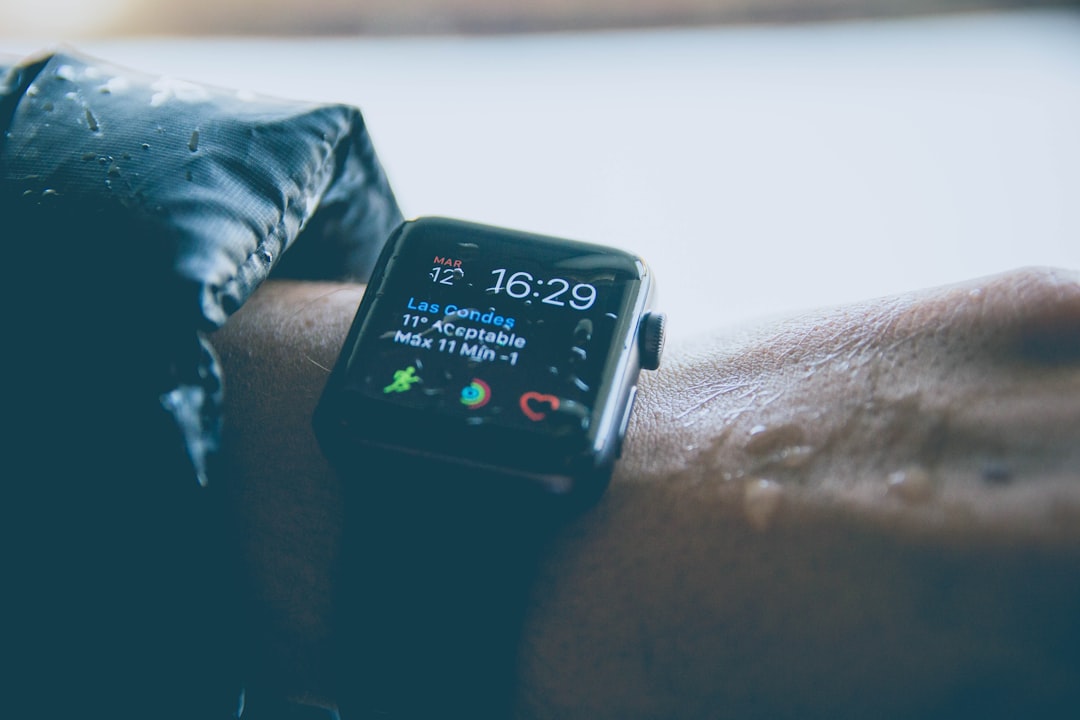
Photo by Alvaro Reyes on Unsplash
What AI Satellite Smartwatch Wearables Actually Are — and Why They Matter
The term covers a converging set of technologies: on-device AI processing, non-terrestrial network (NTN) satellite connectivity, and advanced biometric sensing — all packed onto your wrist. Here is why this fusion is reshaping the gadget landscape:
- Skylo became the first to bring two-way satellite emergency messaging to wearables — a development that “redefines what’s possible with satellite connectivity in everyday devices.”
- Qualcomm unveiled the Snapdragon Wear Elite at MWC 2026, positioning it as the world’s first “Personal AI” wearable platform designed to power the next generation of always-on, AI-driven smartwatches.
- The platform features a multi-mode connectivity architecture including 5G RedCap, Bluetooth 6.0, GNSS, and NB-NTN satellite connectivity — with the inclusion of NB-NTN satellite messaging developed in collaboration with Skylo, enabling two-way messaging when cellular is unavailable.
- Instead of simply recording metrics, these devices will analyze patterns across weeks and months to predict issues before they manifest — detecting overtraining, illness onset, or stress accumulation before users recognize the symptoms themselves.
Key takeaway: AI satellite smartwatch wearables merge space-grade connectivity with clinical-grade intelligence — and the hardware to support them is arriving now.
The Numbers Behind the Revolution
The market data is unambiguous. Satellite-capable smartwatches are projected to grow to 28% of total smartwatch shipments in 2030, up from just 2% in Q3 2025, with Apple, Google, Garmin, and Huawei leading the shift toward satellite-connected smartwatches.
Wearable technology ranks as the top fitness trend for 2026 according to thousands of fitness professionals and has held the number one position for 9 of the last 11 years — with nearly 1 in 3 Americans now using wearable devices to track health and fitness.
Qualcomm’s Snapdragon Wear Elite claims up to 5x improvement in single-core CPU performance, 7x faster GPU performance, and 30% longer day-of-use battery life, with multi-day battery support and 50% charge in roughly 10 minutes.
In August 2025, the first smartwatch with integrated satellite communications powered by Skylo launched via the Google Pixel Watch 4, followed by additional wearables including the Garmin fēnix 8 Pro multisport smartwatches.
The new Garmin D2 Mach 2 Pro features satellite and cellular connectivity, a bright AMOLED display, and up to 24 days of battery life.
Key takeaway: With shipments projected to surge 14x by 2030, satellite AI wearables are not a trend — they are the next platform.
How to Choose and Set Up Your AI Satellite Smartwatch Wearable
Ready to make a smart purchase decision? Follow these steps:
- Step 1: Match the satellite standard to your lifestyle. Apple, Google, Garmin, and Huawei are leading satellite-connected smartwatches with two-way messaging and SOS — choose based on whether you need outdoor adventure coverage or urban emergency backup, with NB-NTN modems enabling low-power global connectivity.
- Step 2: Prioritize on-device AI over cloud-dependent AI. Look for an on-device NPU for advanced AI processing at the edge — this means faster responses, better privacy, and functionality even when offline.
- Step 3: Activate satellite services before you need them. With a satellite connection, users can send messages and location check-ins; in an emergency, SOS capabilities can be triggered from the wrist to reach a 24/7 emergency response coordination center.
- Step 4: Link your AI health ecosystem on Day 1. Fitbit Premium received a complete redesign powered by personalized AI coaching, while Google is expanding Gemini functionality deeper into the Fitbit ecosystem — connect these platforms immediately to start building your personal baseline.
- Step 5: Enable OTA updates. Download productivity tools directly to your watch and stay current with OTA (over-the-air) updates, ensuring your watch always runs the latest firmware with new features and optimizations.
Key takeaway: The right setup turns your wrist into a life-saving, AI-powered hub — but only if you activate every layer from day one.
Mistakes to Avoid With AI Satellite Smartwatch Wearables
- Mistake 1: Assuming satellite = always-on internet. Satellite networks like Skylo’s are designed for critical messaging and SOS — not streaming or data browsing — so embed this expectation before purchase rather than after disappointment.
- Mistake 2: Ignoring subscription costs. Samsung and others are implementing AI subscription charges, and the market faces increasing subscription fatigue — make sure AI features deliver demonstrable value before adding yet another monthly payment.
- Mistake 3: Buying now without checking for Snapdragon Wear Elite devices. With new smartwatches expected to launch with Snapdragon Wear Elite, it may be wise to hold off — especially for users who prioritize long battery life, advanced AI features, satellite messaging, and next-gen connectivity.
Frequently Asked Questions
Q: Which smartwatches currently have satellite connectivity in 2026?
Skylo, a CES 2026 Innovation Award honoree for smartwatch satellite connectivity, powers the Google Pixel Watch 4 — the first smartwatch with integrated standards-based satellite communications — as well as the Garmin fēnix 8 Pro announced in late 2025. The Apple Watch Ultra 3 also now features satellite connectivity alongside 5G and a boosted 42-hour battery life.
Q: Do AI satellite smartwatch wearables work without a phone?
By embedding satellite service into wearables, companies are making standalone emergency messaging available in the moments that matter most — without a phone or cellular plan. The Google Pixel Watch 4, for example, can connect directly to the nearest emergency services by utilizing satellite SOS technology even when there is no cellular signal available.