
SpaceX Secures $60B Option to Acquire Cursor AI in Historic Deal
SpaceX announced on Tuesday a groundbreaking deal structure that gives Elon Musk’s rocket-and-AI conglomerate the right to purchase AI coding startup Cursor for $60 billion before the end of 2026, or walk away after paying $10 billion for nine months of joint work. This marks one of the largest acquisition options in tech history and signals SpaceX’s aggressive push into AI software ahead of its planned IPO.
Cursor, made by San Francisco startup Anysphere, is a popular AI coding assistant whose wide “distribution to expert software engineers” makes it attractive to Musk’s company. The deal gives SpaceX immediate access to hundreds of thousands of developers using Cursor’s tools daily, positioning the company to compete directly with OpenAI and Anthropic in the AI coding market.
The combination leverages Cursor’s leading product and distribution with SpaceX’s million H100 equivalent Colossus training supercomputer, creating what both companies aim to build as “the world’s best coding and knowledge work AI.”
Why This Matters in 2026
The deal underscores Elon Musk’s push to make SpaceX into an AI powerhouse ahead of its potential IPO. The SpaceX IPO, targeted for June, is aiming for a $1.75 billion to $1.8 trillion valuation, potentially making it the largest in history. Adding Cursor’s developer reach and proven AI coding technology strengthens SpaceX’s narrative as more than just a rocket company.
Cursor explained they’ve been “bottlenecked by compute” and that the partnership will allow them to leverage xAI’s Colossus infrastructure to dramatically scale up the intelligence of their models. This compute-for-equity pattern is becoming the new currency of AI deal-making in 2026.
OpenAI was an early investor in Cursor, making the SpaceX partnership a shift in alignment. The timing, just days before a high-profile legal case between Musk and OpenAI CEO Sam Altman, adds competitive intrigue to this strategic realignment.
Key takeaway: SpaceX is using massive compute infrastructure and a flexible deal structure to compete with OpenAI and Anthropic while de-risking what could become a $60 billion acquisition.
What the SpaceX Cursor AI Acquisition Option Means and Why It Matters
- Flexible structure reduces risk: The dual-path approach—either a full $60 billion acquisition or a $10 billion partnership arrangement—lets SpaceX maintain optionality while securing access to Cursor’s technology and user base
- Valuation trajectory shows explosive growth: Cursor was valued at just $2.5 billion in January 2025, climbed to $9 billion by May, and reached a $29.3 billion post-money valuation when it closed on $2.3 billion in Series D funding in November
- Developer distribution is the prize: Cursor’s “distribution to expert software engineers” gives SpaceX access to a new customer base, instantly establishing credibility in enterprise AI coding markets
- Timing aligns with IPO ambitions: Partnering with a leader in the hottest AI product category can be seen in context of SpaceX’s much-anticipated public offering, as investors seeking more value might see Cursor as another way to extract value from Musk’s sprawling tech conglomerate
Key takeaway: The SpaceX Cursor AI acquisition option is a strategic play for developer distribution, compute leverage, and IPO valuation enhancement rolled into one flexible deal structure.
Data and Evidence Behind the Deal
Cursor is currently in talks to raise $2 billion at a valuation of over $50 billion, with Andreessen Horowitz slated to co-lead the round alongside Nvidia and Thrive Capital. This creates an interesting dynamic: Cursor agreed to a maximum acquisition price of $60 billion while actively raising capital at $50 billion.
The compute partnership forms the deal’s backbone. xAI will supply computing power to train Cursor’s latest AI model, Composer 2.5, using tens of thousands of graphics processing units (GPUs). This arrangement effectively positions xAI as a cloud provider while giving SpaceX strategic leverage in the rapidly expanding AI infrastructure market.
Cursor’s market position stems from pioneering accessible AI coding tools. Cursor’s Composer, combined with Anthropic’s Claude Sonnet, led a prominent AI researcher to coin the phrase “vibe coding” in early 2025 during weekend projects. This cultural moment helped establish Cursor as the developer-preferred coding assistant.
Elon Musk merged SpaceX with his AI startup xAI in February in a deal he valued at $1.25 trillion, and he’s now poised to take the combined company public in what will likely be a record IPO. The Cursor deal adds immediate AI software revenue and user traction to what has been primarily a hardware and infrastructure story.
Key takeaway: Cursor’s rapid valuation climb from $2.5B to potentially $60B in 18 months demonstrates the explosive growth trajectory of AI coding tools, making this deal strategically timed for SpaceX’s IPO narrative.
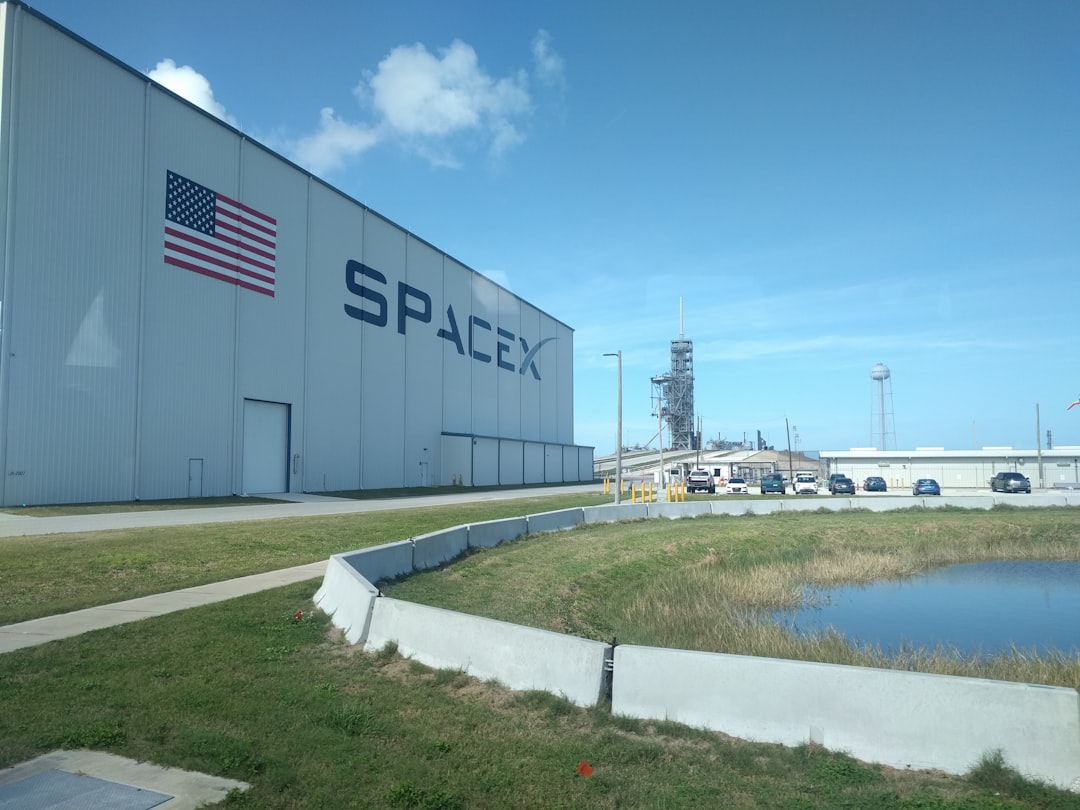
Photo by Jérôme Boursier on Unsplash
How to Understand This Deal Structure
- Step 1: Recognize the dual optionality. SpaceX holds a call option to acquire Cursor for $60 billion by end of 2026 or pay $10 billion for collaborative work—creating downside protection while maintaining upside exposure to Cursor’s growth
- Step 2: Watch the compute-for-access model. Cursor gets cost-effective access to premium GPU capacity for model training, while the partnership strengthens ties and allows SpaceX to evaluate Cursor’s technology and team performance in real-world conditions
- Step 3: Track the competitive implications. Neither Cursor nor xAI has proprietary models matching the leading offerings from Anthropic and OpenAI—the same companies now competing directly with Cursor for the developer market, making this partnership about catching up through combination
- Step 4: Monitor IPO timing. The option period runs through the end of 2026, giving SpaceX the entire year to evaluate performance before the acquisition decision—and importantly, before or shortly after the June IPO
- Step 5: Follow talent movement. Last month, two of Cursor’s most senior engineering leaders, Andrew Milich and Jason Ginsberg, left to join xAI where both report directly to Musk, signaling deeper integration is already underway
Key takeaway: This deal is a textbook case of using compute infrastructure as strategic leverage to acquire both technology and talent while maintaining financial flexibility through option structures.
Mistakes to Avoid When Evaluating the SpaceX Cursor AI Acquisition
- Mistake 1: Assuming this is a done deal. SpaceX’s post clarified the structure as an option rather than a completed acquisition—the $60B figure is a ceiling price, not a confirmed transaction, and SpaceX could walk away by paying just $10B
- Mistake 2: Ignoring the compute dependency. Neither Cursor nor xAI has proprietary models that can match leading offerings from Anthropic and OpenAI, meaning this partnership is about infrastructure access as much as product integration—without sustained compute advantage, the strategic rationale weakens
- Mistake 3: Overlooking the valuation tension. With Cursor simultaneously raising funds at a $50B valuation while granting an acquisition option at $60B, there’s only 20% premium for a full buyout—this tight spread suggests Cursor has significant negotiating leverage and may prefer to remain independent
- **Mistake 4: